The Function Machine Island
Teacher edition: print includes answers.
The wheel that answered

The waterwheel of Isla Machina turned once, then stopped. Jake and Crooke stood before a brass machine with an input tray and a shuttered output. Crooke held up a smooth pebble as if it were a lucky key. Jake pointed to the record plate. Earlier keepers had written what went in and what came out. The missing entry controlled the wheel. Across the island, other gears waited in complete silence.
Jake: The machine follows a rule. Let us use its records to find what it needs. Luck will not tell us the setting.
Captain Crooke: I was going to keep the pebble as a paperweight. Obviously. Here, put it on your notebook before the wind takes it.
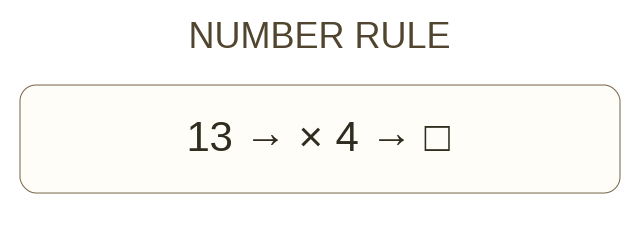
Use the machine’s record to set the waterwheel. The rule is multiply by 4. What is the output for input 13?

52 • 53 • 42
Hint and solution
Multiply the input by the stated factor.
13 × 4 = 52. Check: 52 ÷ 4 = 13.
The correct setting released the wheel. Farther inland, another gear answered with a deep metallic knock.
Chapter speed fact (required in interactive edition)
What is 48 ÷ 8?
48 ÷ 8 = 6.
The unexpected output

A conveyor carried empty brass trays towards a second machine. Jake followed it to the output hatch. As he crouched, a gust of warm air lifted his hair. The first machine had not merely opened their path; it had powered this one. Crooke traced a pipe with her lantern. It ran into the hillside rather than back towards the wheel. Two records survived beside the hatch. One showed an output, the other left a gap. Jake would need to use the rule in more than one direction.
Jake: Check the examples, then check our result. A rule should explain every record we have, not just the first one.
Captain Crooke: There is a sound inside that hill. Not an animal. More like a very large clock remembering how to work.
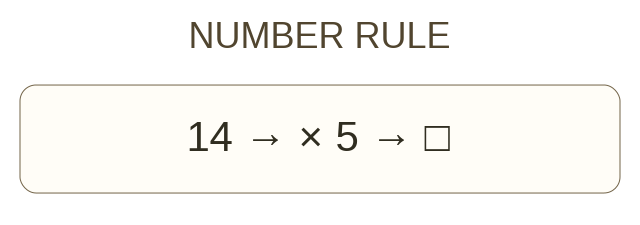
The output record is missing a value. The rule is multiply by 5. What is the output for input 14?
71 • 60 • 70
Hint and solution
Multiply the input by the stated factor.
14 × 5 = 70. Check: 70 ÷ 5 = 14.
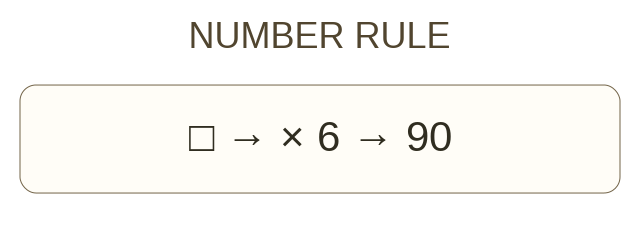
Work backwards through this machine record. The rule is multiply by 6. Which input produces 90?
5 • 15 • 16
Hint and solution
Divide the total by 6, the known factor.
90 ÷ 6 = 15. Check: 6 × 15 = 90.
The output hatch opened. A pulse of light travelled along the pipe and disappeared into a two-stage mechanism.
Chapter speed fact (required in interactive edition)
What is 70 ÷ 10?
70 ÷ 10 = 7.
One answer becomes another clue

Two separate stages stood on the next platform, joined by an arrow-shaped pipe. Jake watched a brass pointer move from the first to the second. The stages did different jobs. Crooke reached past the first control, eager to open the far gate. Jake shook his head. The second stage needed a value produced by the first. They had to keep their working in order. On the casing was the book-and-wave symbol, this time with a line connecting it to every island.
Jake: The first result is useful information for the next step. We must carry it across carefully, not start again with a guess.
Captain Crooke: So my shortcut would skip the very clue I need. Annoying. Also rather clever. I shall write this one down.
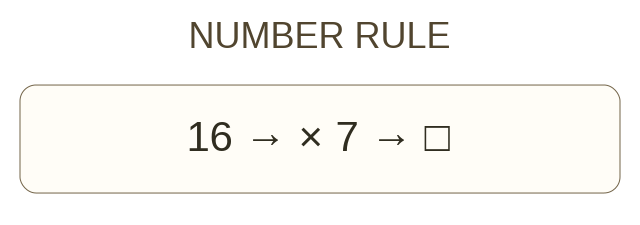
Find the value from the first machine stage. The rule is multiply by 7. What is the output for input 16?

112 • 113 • 102
Hint and solution
Multiply the input by the stated factor.
16 × 7 = 112. Check: 112 ÷ 7 = 16.
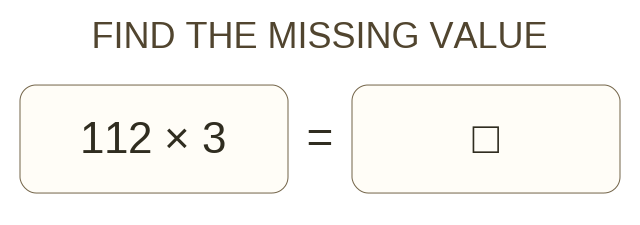
The earlier stage produced 112. The next stage multiplies by 3. What is its output?
337 • 326 • 336
Hint and solution
Use the recorded previous output as the new input.
112 × 3 = 336. The first result becomes the next input.
Both stages settled. The casing opened to reveal a sketch of paired locks, which Jake copied immediately.
Chapter speed fact (required in interactive edition)
What is 32 ÷ 4?
32 ÷ 4 = 8.
The chain beneath the islands

Beside a canal, brass control posts rose from the stone. Their lamps blinked in a pattern. Jake compared the pattern with the machine records while Crooke peered over the rail. Under the clear water, a chain stretched away towards the sea. The same mechanism linked the islands. A deep bell rang, and one canal gate slid shut behind them. Ahead, a drawbridge remained upright. Three control posts governed the water feeding its lifting wheel.
Jake: This is one system. Every island changes the next. If we understand the pattern, we can send the water where it is needed.
Captain Crooke: Then opening things without reading them is a poor hobby. I may have been practising it for rather too long.
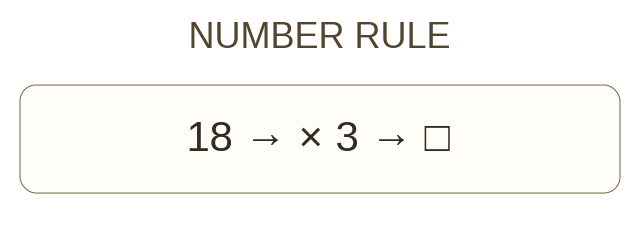
Recover the first canal control setting. The rule is multiply by 3. What is the output for input 18?
44 • 54 • 55
Hint and solution
Multiply the input by the stated factor.
18 × 3 = 54. Check: 54 ÷ 3 = 18.
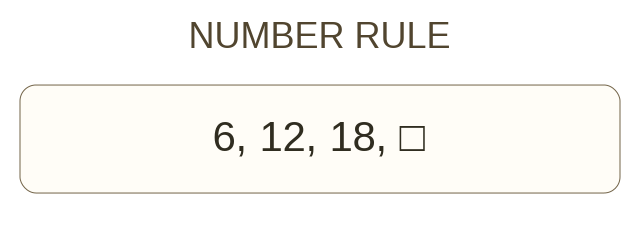
Follow the rule to set the next canal post. Start at 6 and add 6 each time. What is the next number?
24 • 25 • 14
Hint and solution
Use the same addition step again.
6, 12, 18, 24: each step adds 6.
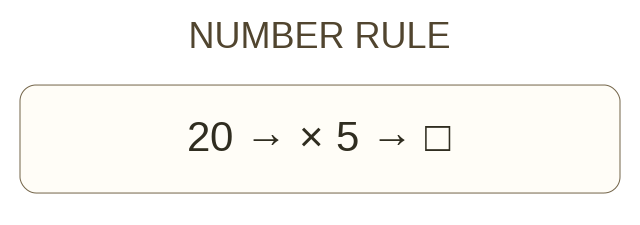
Check the final canal post’s missing value. The rule is multiply by 5. What is the output for input 20?
101 • 90 • 100
Hint and solution
Multiply the input by the stated factor.
20 × 5 = 100. Check: 100 ÷ 5 = 20.
The three controls redirected the canal. The drawbridge wheel began to move, but its final catch stayed closed.
Chapter speed fact (required in interactive edition)
What is 54 ÷ 6?
54 ÷ 6 = 9.
The bridge and the warning

Jake and Crooke approached the raised drawbridge. On the far side, a little map cabinet was fixed to the wall. Two final settings controlled the catch and the counterweight. Across the water, Jake could see a garden maze on the next island. Its walls seemed to shift when the sunlight changed. Beneath the drawbridge controls, an inscription finally explained the bell: When the last tide turns, the keeper closes the way.
Jake: The keeper may be the machine itself. We can still take our time to check. Wrong settings will not help us get there sooner.
Captain Crooke: I would like to meet this keeper in daylight, with a working bridge behind me. Let us make that happen.
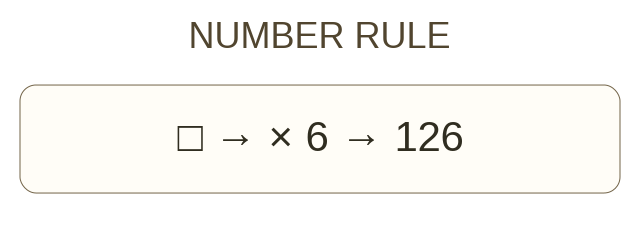
Find the drawbridge catch setting. The rule is multiply by 6. Which input produces 126?
11 • 21 • 22
Hint and solution
Divide the total by 6, the known factor.
126 ÷ 6 = 21. Check: 6 × 21 = 126.
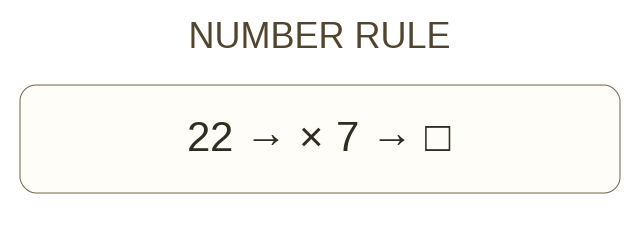
Recover the counterweight setting. The rule is multiply by 7. What is the output for input 22?
154 • 155 • 144
Hint and solution
Multiply the input by the stated factor.
22 × 7 = 154. Check: 154 ÷ 7 = 22.
The bridge lowered. Jake collected fragment three from the cabinet and kept the paired-lock sketch beside it.
Chapter speed fact (required in interactive edition)
What is 16 ÷ 8?
16 ÷ 8 = 2.
Ending
From the far bank, Jake watched the garden maze. This time there was no doubt: a wall moved. Crooke tucked her notebook into her coat and climbed into her boat. The tide was turning the islands, and the islands were changing the route. As they approached the maze, two entrances opened. Then a hedge slid between them, hiding one from the other.