The Function Machine Island
Teacher edition: print includes answers.
The wheel that answered
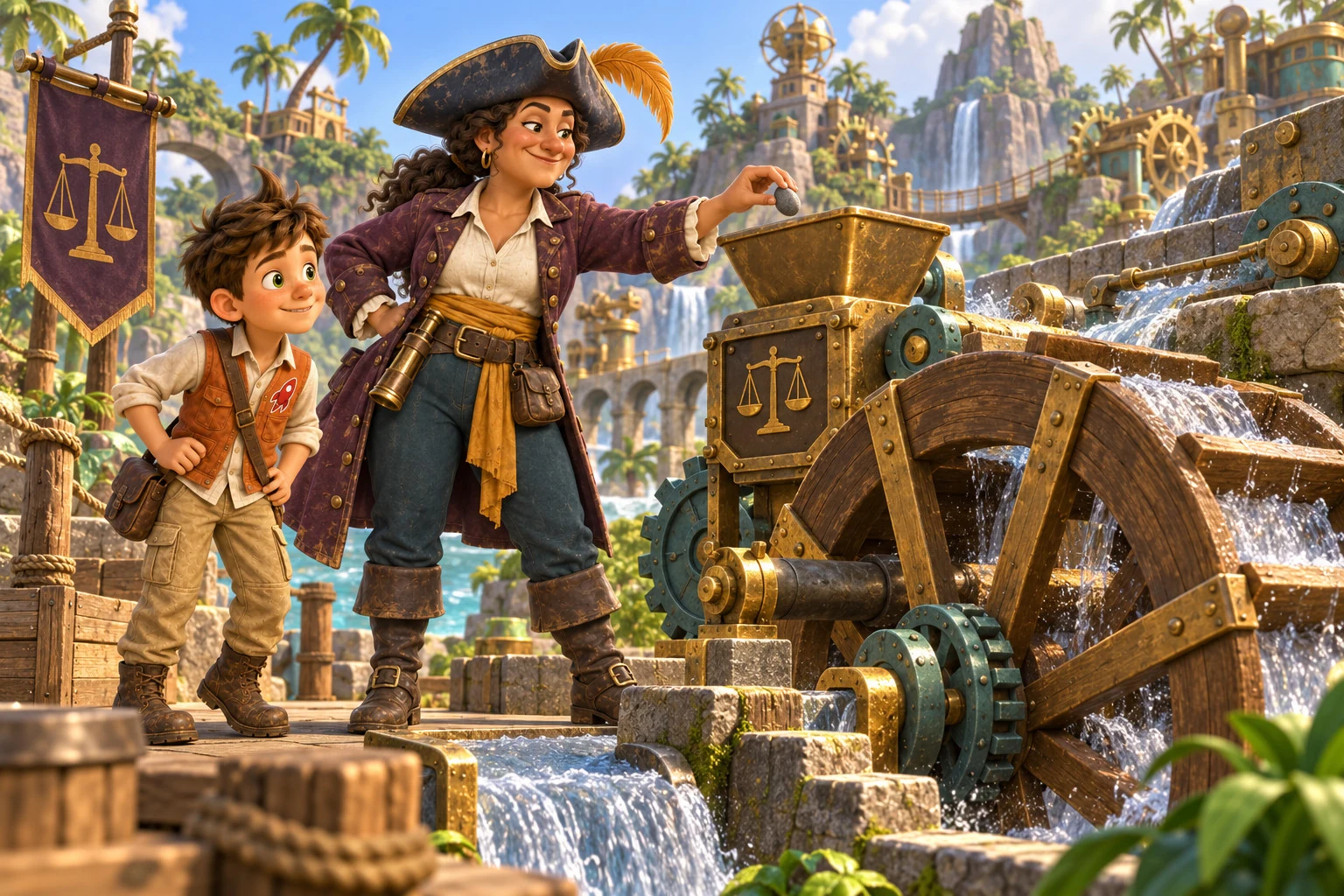
The waterwheel of Isla Machina turned once, then stopped. Jake and Crooke stood before a brass machine with an input tray and a shuttered output. Crooke held up a smooth pebble as if it were a lucky key. Jake pointed to the record plate. Earlier keepers had written what went in and what came out. The missing entry controlled the wheel. Across the island, other gears waited in complete silence.
Jake: The machine follows a rule. Let us use its records to find what it needs. Luck will not tell us the setting.
Captain Crooke: I was going to keep the pebble as a paperweight. Obviously. Here, put it on your notebook before the wind takes it.
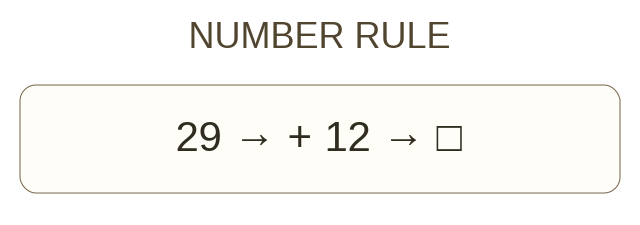
Use the machine’s record to set the waterwheel. The rule is add 12. What is the output for input 29?

31 • 41 • 42
Hint and solution
Apply the stated rule to the input.
29 + 12 = 41. Check by undoing it: 41 − 12 = 29.
The correct setting released the wheel. Farther inland, another gear answered with a deep metallic knock.
Chapter speed fact (required in interactive edition)
What is 6 × 8?
6 × 8 = 48.
The unexpected output

A conveyor carried empty brass trays towards a second machine. Jake followed it to the output hatch. As he crouched, a gust of warm air lifted his hair. The first machine had not merely opened their path; it had powered this one. Crooke traced a pipe with her lantern. It ran into the hillside rather than back towards the wheel. Two records survived beside the hatch. One showed an output, the other left a gap. Jake would need to use the rule in more than one direction.
Jake: Check the examples, then check our result. A rule should explain every record we have, not just the first one.
Captain Crooke: There is a sound inside that hill. Not an animal. More like a very large clock remembering how to work.
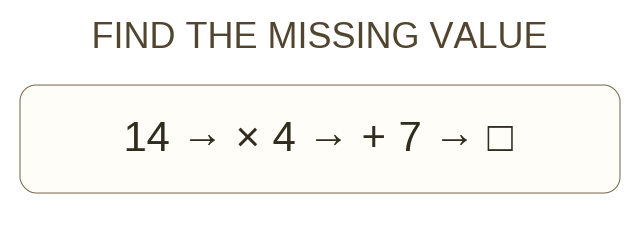
The output record is missing a value. First multiply input 14 by 4, then add 7. What is the final output?
63 • 64 • 53
Hint and solution
Keep the two stages in order. Multiply first; add to that result.
14 × 4 = 56. Then 56 + 7 = 63. Reversing the stages would produce a different result.
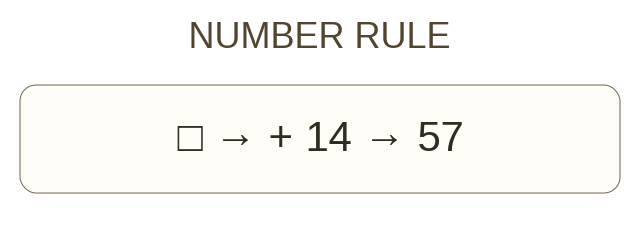
Work backwards through this machine record. The rule is add 14. Which input produces 57?
44 • 33 • 43
Hint and solution
The total is 57. Take away the known part, 14.
57 − 14 = 43. Check: 43 + 14 = 57.
The output hatch opened. A pulse of light travelled along the pipe and disappeared into a two-stage mechanism.
Chapter speed fact (required in interactive edition)
What is 7 × 10?
7 × 10 = 70.
One answer becomes another clue
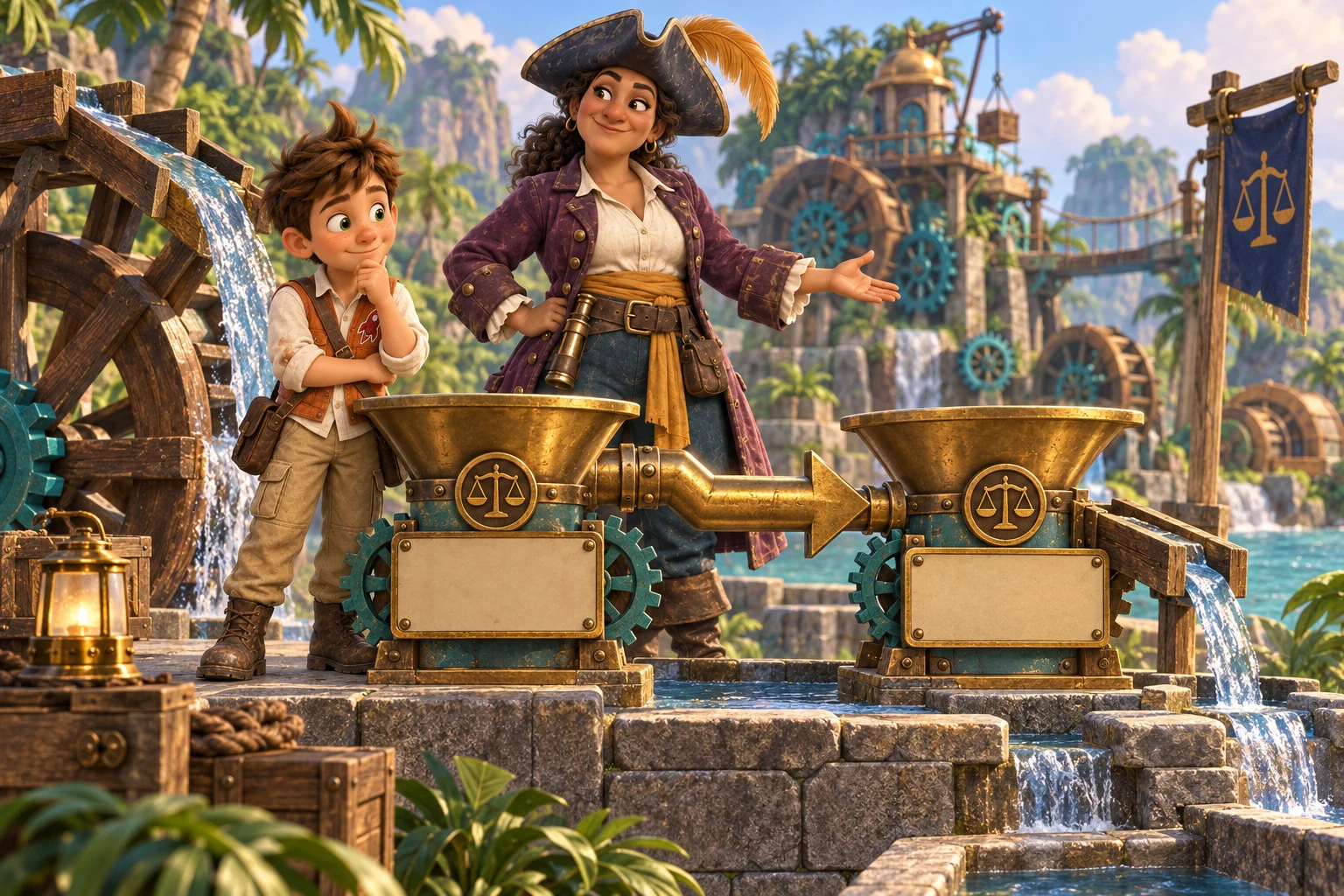
Two separate stages stood on the next platform, joined by an arrow-shaped pipe. Jake watched a brass pointer move from the first to the second. The stages did different jobs. Crooke reached past the first control, eager to open the far gate. Jake shook his head. The second stage needed a value produced by the first. They had to keep their working in order. On the casing was the book-and-wave symbol, this time with a line connecting it to every island.
Jake: The first result is useful information for the next step. We must carry it across carefully, not start again with a guess.
Captain Crooke: So my shortcut would skip the very clue I need. Annoying. Also rather clever. I shall write this one down.
Find the value from the first machine stage. First multiply input 16 by 3, then add 9. What is the final output?

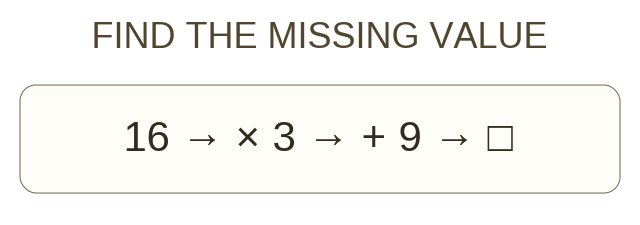
47 • 57 • 58
Hint and solution
Keep the two stages in order. Multiply first; add to that result.
16 × 3 = 48. Then 48 + 9 = 57. Reversing the stages would produce a different result.
The earlier stage produced 57. The next stage adds 7. What is its output?
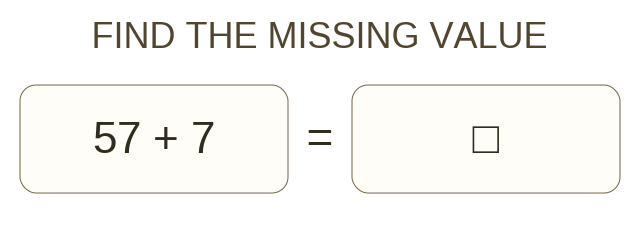
64 • 65 • 54
Hint and solution
Use the recorded previous output as the new input.
57 + 7 = 64. The first result becomes the next input.
Both stages settled. The casing opened to reveal a sketch of paired locks, which Jake copied immediately.
Chapter speed fact (required in interactive edition)
What is 8 × 4?
8 × 4 = 32.
The chain beneath the islands
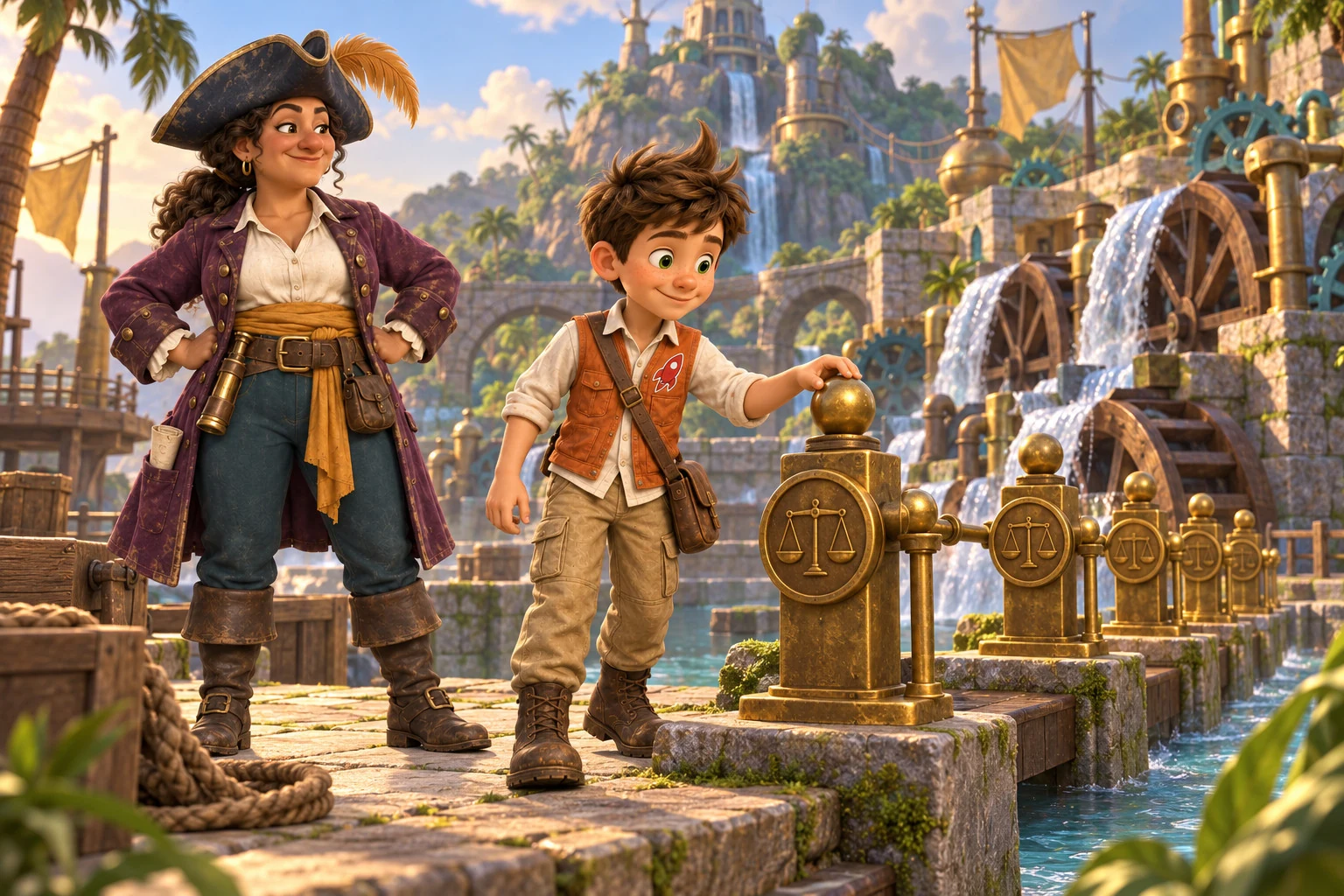
Beside a canal, brass control posts rose from the stone. Their lamps blinked in a pattern. Jake compared the pattern with the machine records while Crooke peered over the rail. Under the clear water, a chain stretched away towards the sea. The same mechanism linked the islands. A deep bell rang, and one canal gate slid shut behind them. Ahead, a drawbridge remained upright. Three control posts governed the water feeding its lifting wheel.
Jake: This is one system. Every island changes the next. If we understand the pattern, we can send the water where it is needed.
Captain Crooke: Then opening things without reading them is a poor hobby. I may have been practising it for rather too long.
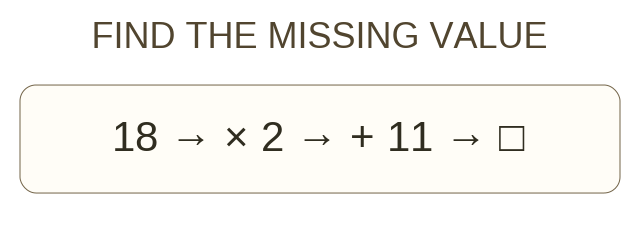
Recover the first canal control setting. First multiply input 18 by 2, then add 11. What is the final output?
48 • 37 • 47
Hint and solution
Keep the two stages in order. Multiply first; add to that result.
18 × 2 = 36. Then 36 + 11 = 47. Reversing the stages would produce a different result.
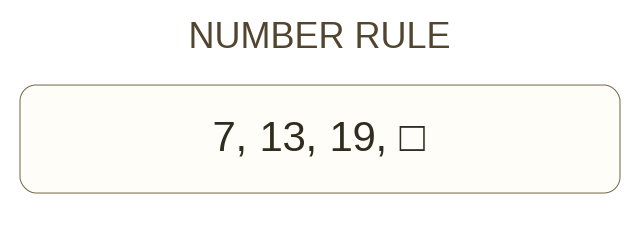
Follow the rule to set the next canal post. Start at 7 and add 6 each time. What is the next number?
15 • 25 • 26
Hint and solution
Use the same addition step again.
7, 13, 19, 25: each step adds 6.
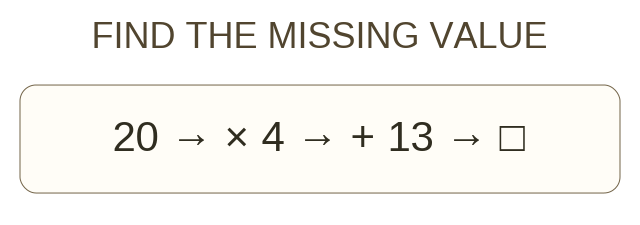
Check the final canal post’s missing value. First multiply input 20 by 4, then add 13. What is the final output?
93 • 94 • 83
Hint and solution
Keep the two stages in order. Multiply first; add to that result.
20 × 4 = 80. Then 80 + 13 = 93. Reversing the stages would produce a different result.
The three controls redirected the canal. The drawbridge wheel began to move, but its final catch stayed closed.
Chapter speed fact (required in interactive edition)
What is 9 × 6?
9 × 6 = 54.
The bridge and the warning
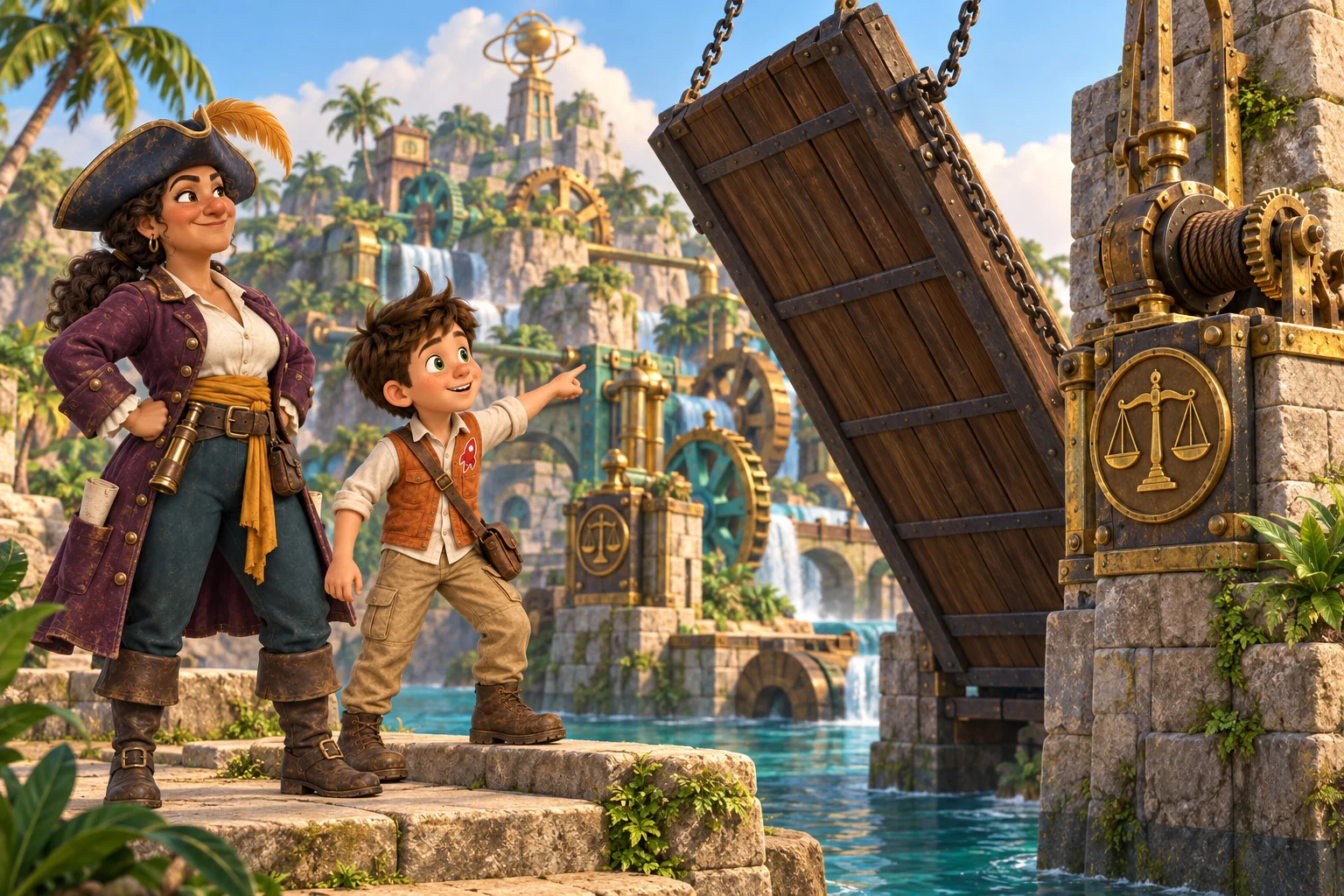
Jake and Crooke approached the raised drawbridge. On the far side, a little map cabinet was fixed to the wall. Two final settings controlled the catch and the counterweight. Across the water, Jake could see a garden maze on the next island. Its walls seemed to shift when the sunlight changed. Beneath the drawbridge controls, an inscription finally explained the bell: When the last tide turns, the keeper closes the way.
Jake: The keeper may be the machine itself. We can still take our time to check. Wrong settings will not help us get there sooner.
Captain Crooke: I would like to meet this keeper in daylight, with a working bridge behind me. Let us make that happen.
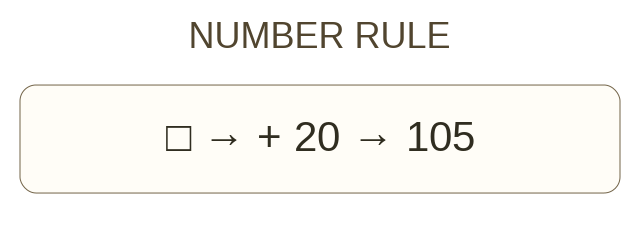
Find the drawbridge catch setting. The rule is add 20. Which input produces 105?
86 • 75 • 85
Hint and solution
The total is 105. Take away the known part, 20.
105 − 20 = 85. Check: 85 + 20 = 105.
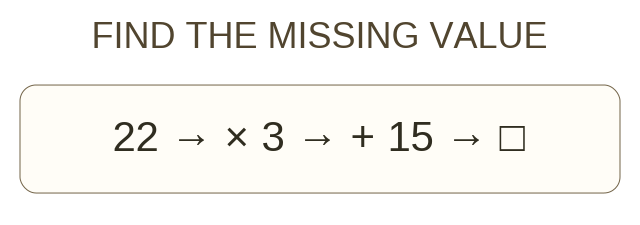
Recover the counterweight setting. First multiply input 22 by 3, then add 15. What is the final output?
71 • 81 • 82
Hint and solution
Keep the two stages in order. Multiply first; add to that result.
22 × 3 = 66. Then 66 + 15 = 81. Reversing the stages would produce a different result.
The bridge lowered. Jake collected fragment three from the cabinet and kept the paired-lock sketch beside it.
Chapter speed fact (required in interactive edition)
What is 2 × 8?
2 × 8 = 16.
Ending
From the far bank, Jake watched the garden maze. This time there was no doubt: a wall moved. Crooke tucked her notebook into her coat and climbed into her boat. The tide was turning the islands, and the islands were changing the route. As they approached the maze, two entrances opened. Then a hedge slid between them, hiding one from the other.